Invisible Influencers
Every day, we’re surrounded by thousands of chemicals, some in our food, some in the air, some in the products we put on our skin. Most of these compounds are harmless in small amounts, but some can mimic or disrupt your body’s natural hormones, creating a subtle hormone hijack. Scientists call these endocrine-disrupting chemicals (EDCs), which interfere with hormone balance and hormone health.
Even at low levels, these “silent imitators” can interfere with how your hormones communicate, creating subtle but significant changes in mood, metabolism, reproduction, and immunity. In short, they quietly hijack your hormonal balance.
“The endocrine system works like a finely tuned orchestra, introduce even a tiny off-key note, and the whole symphony can falter.” – Dr. Theo Colborn, Environmental Health Scientist (Colborn et al., 1996)
How Chemicals Hijack Your Hormones
Hormones are chemical messengers that rely on precise timing and receptor binding. EDCs can interfere in three main ways:
- Mimicry: Chemicals act like your natural hormones and activate receptors inappropriately.
- Blockers: Chemicals prevent your hormones from binding to their receptors.
- Signal disruption: Chemicals interfere with hormone production, metabolism, or elimination.
Example: BPA mimics estrogen, tricking your body into “thinking” it has higher estrogen levels than it really does, which may lead to fat accumulation, mood changes, or menstrual irregularities.
Everyday Sources You Might Not Expect
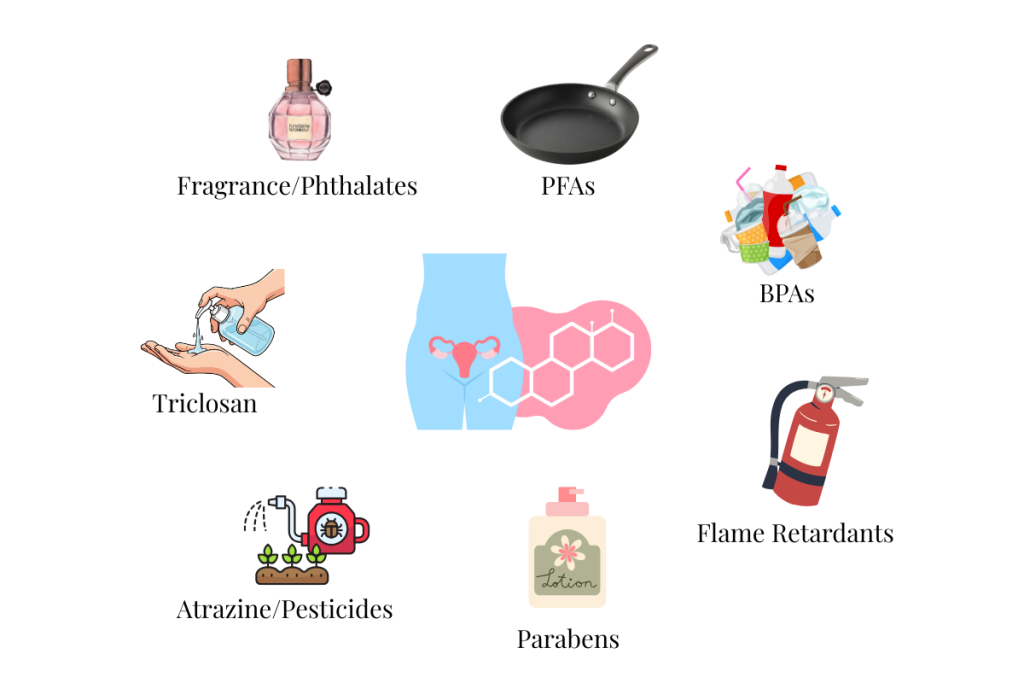
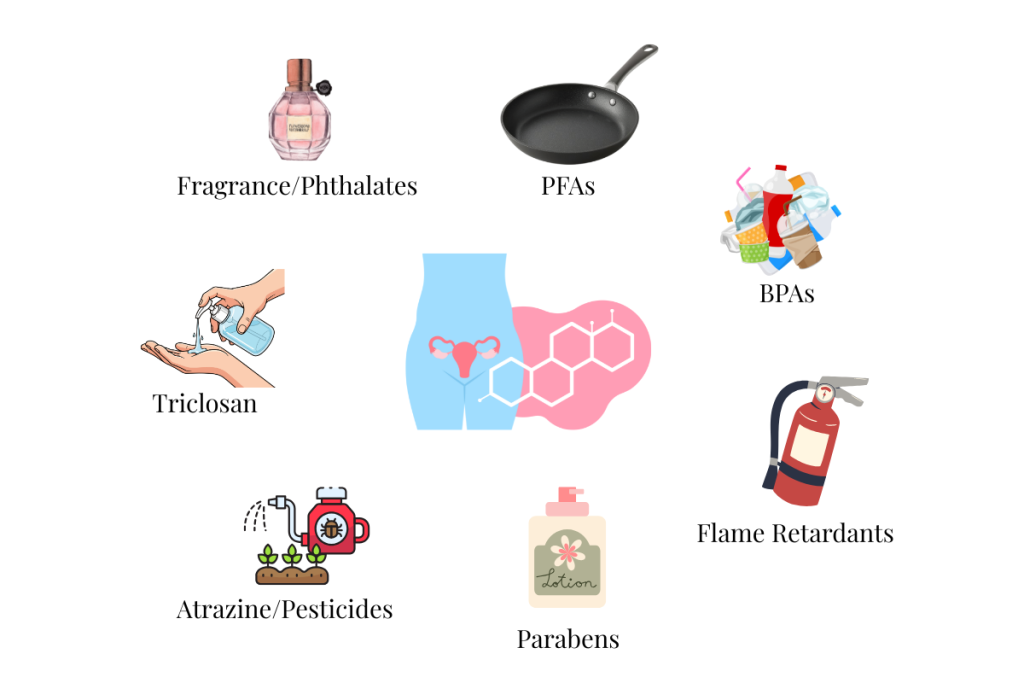
Many people assume chemical exposure only comes from industrial pollution, but EDCs are everywhere:
- Food containers and packaging (cans, plastic bottles) – common sources of chemicals that mimic hormones and disrupt your hormone balance.
- Personal care products (lotions, shampoos, perfumes)
- Cleaning products with synthetic fragrances
- Nonstick cookware and stain-resistant fabrics
- Receipt paper (thermal paper often contains BPA)
Even “natural” or “organic” products aren’t always free of endocrine disruptors, so vigilance and informed choices matter.
Who Is Most Vulnerable?
Some people are more sensitive to hormone disruption:
- Pregnant or breastfeeding women: EDCs can affect fetal and infant development.
- Children: Developing endocrine systems are highly sensitive.
- People with hormone imbalances: Pre-existing thyroid, adrenal, or reproductive disorders may worsen with exposure.
“Hormone disruption doesn’t always show immediate symptoms, it’s a slow, cumulative effect that can manifest years later.” – Dr. Leonardo Trasande, Pediatrician and Environmental Health Researcher
Steps to Protect Yourself
While it’s impossible to avoid every chemical, you can reduce exposure and support hormone balance:
1. Be Plastic-Savvy
- Choose glass or stainless steel over plastic bottles and food containers to reduce exposure to endocrine-disrupting chemicals (EDCs) that can leach into your food and affect hormone balance.
- Avoid microwaving food in plastic, as heat can release hormone-disrupting chemicals like BPA and phthalates that interfere with hormone health.
2. Mind Your Personal Care Products
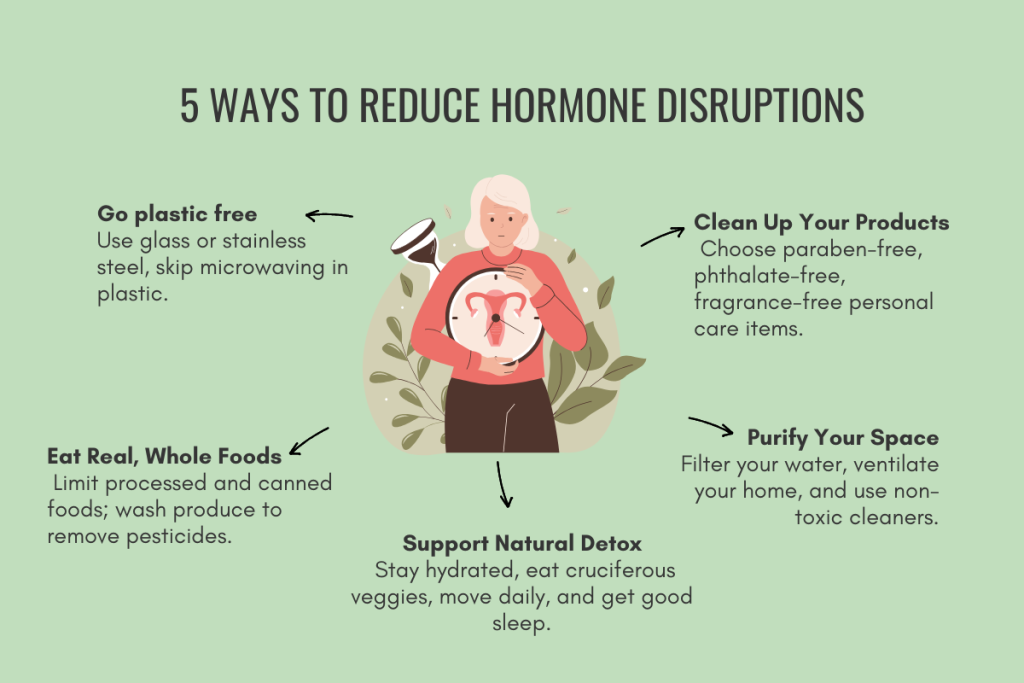
- Read labels for parabens, phthalates, and synthetic fragrances, common hormone disruptors that can mimic estrogen and throw off your hormone balance.
- Opt for fragrance-free or naturally scented products made without endocrine-disrupting chemicals to protect your hormone health.
3. Eat Whole, Minimally Processed Foods
- Reduce canned foods and highly processed packaged items to limit exposure to hormone-disrupting chemicals. Eating fresh, whole foods supports hormone balance and overall hormone health.
- Wash fruits and vegetables thoroughly to remove pesticides and other chemicals that mimic hormones.
4. Support Your Body’s Detox Pathways
- Adequate hydration, fiber-rich foods, and liver-supporting nutrients (leafy greens, cruciferous vegetables, B vitamins) help your body eliminate endocrine-disrupting chemicals (EDCs) and restore hormone balance.
- Gentle movement, sweating, and restorative sleep further support natural hormone detox and protect hormone health.
5. Filter Water and Air When Possible
- Using a quality water filter reduces chemical contaminants that may disrupt hormones.
- Ventilating living spaces and using air purifiers can lower indoor exposure to hormone-disrupting chemicals, helping maintain healthy hormone balance.
A New Perspective: Not All Hormone Disruption Is Bad
Interestingly, some researchers argue that exposure to very low levels of certain chemicals can prime the body’s detox and adaptive responses, similar to hormesis, the idea that small stressors strengthen resilience.
However, this doesn’t justify heavy exposure, cumulative and chronic exposure remains risky. The key takeaway is awareness, moderation, and support for natural detox pathways.
Conclusion
Everyday chemicals may be quietly hijacking your hormones, but with informed choices and supportive lifestyle habits, you can reduce their impact and restore balance. Paying attention to what you put in and on your body, supporting detox pathways, and staying mindful of exposure can make a measurable difference over time.
For those looking for extra support, a seasonal or periodic detox paired with nutrient-dense eating, movement, and stress management can help your body process and eliminate toxins more efficiently.
At Wholesome Health, Cindy brings over 25 years of experience helping women navigate hormone changes before, during, and after menopause, naturally and effectively.
✨ Learn more about our Hormone Imbalance Services.

References
- Colborn, Theo, et al. Our Stolen Future. Dutton, 1996.
- Rochester, Johanna R. “Bisphenol A and Human Health: A Review of the Literature.” Reproductive Toxicology, 2013.
- Trasande, Leonardo, et al. “Public Health and Economic Consequences of Endocrine-Disrupting Chemicals in the United States.” Lancet Diabetes & Endocrinology, 2015.
- Diamanti-Kandarakis, Evanthia, et al. “Endocrine-Disrupting Chemicals: An Endocrine Society Scientific Statement.” Endocrine Reviews, 2009.
- Gore, Andrea C., et al. “EDCs and Health: A Global Perspective.” Endocrine Reviews, 2015.